Joseph McNamara // Chiropractic Neurologist, Fellow of the American College of Functional Neurology, Nutritional Consultant, Firefighter, Father of 3, Happily married
This is a subject I have followed for years and I still can't understand why we fluoridate our water.
Concerns about the increasing use of antidepressant drugs by children came into focus in 2003 when health officials in the United States, Britain, France, and Canada issued warnings that the popular selective serotonin reuptake inhibitor (SSRI) paroxetine (Paxil) might increase the risk of hostility, mood swings, aggression, and suicide in children and adolescents. The European and FDA warnings were based on three clinical trials involving patients under 18 with major depression, in which 1%–2% of those taking a placebo and 2%–3.5% of those taking paroxetine showed potentially suicidal behavior. There were no suicides in either group.
Soon afterward, the manufacturer of another popular antidepressant, venlafaxine (Effexor), issued a similar warning based on a study in which 2% of children and adolescents taking the drug reported thoughts of suicide, compared with none receiving a placebo.
How serious is the risk, and are antidepressants worth it? These drugs probably can be useful for children, although the evidence is mixed and conflicting. Several controlled trials favor antidepressants, including paroxetine and fluoxetine (Prozac), over a placebo. A 2003 study published in the Journal of the American Medical Association compared sertraline (Zoloft) with a placebo in children ages 6–17 with major depression. In two trials, the combined response rate was 69% for sertraline and 59% for the placebo — a modest but statistically significant effect. But other studies have found no benefit from paroxetine or sertraline. Fluoxetine is the only drug now specifically approved for major depression in children and adolescents, but any antidepressant approved for adult patients can legally be prescribed for children.
Small but significant numbers of children are actually taking the drugs. For example, a study based on data from 1998–99 found that 5% of 200,000 children served by Medicaid in Connecticut received at least one psychotropic medication. Stimulants for attention deficit disorder were the most commonly prescribed drugs, but one quarter of children who received any psychoactive drug received an antidepressant.
Rarely, antidepressants are given even to children under five. Two-year records of prescriptions for preschool children in Oregon indicated that about 2% had diagnosed emotional or behavior problems. Of those, 10% were taking psychotropic medications and 1/8 of that 10% were taking antidepressants — about one child in 5,000. Most of these children were not simply depressed but had severe attention deficit disorder, post-traumatic symptoms, or developmental disorders including autism.
The number of American children taking antidepressants may seem low, but it is much higher than in Europe, and it is growing. A 2003 study of nearly one million patients under 18 enrolled in two Medicaid systems and a health maintenance organization found that the number of prescriptions for antidepressants increased between 1987 and 1996 — nearly 4 times in one organization, 6 times in the second, and 10 times in the third. Patients under 18 now account for about 5% of antidepressant prescriptions.
The public is becoming concerned about possible overmedication. Critics fear that physicians are adopting chemical solutions to the emotional problems of children because of pressure from insurers and health maintenance organizations.
Under a federal law passed in 1997, pharmaceutical companies owning the patent for a medicine can win an extra six months of exclusive marketing rights by testing its efficacy in children. The law is beginning to have its intended effects; that’s how the findings on venlafaxine came to light. But there is little incentive to do such research on drugs that are not patented. And the FDA cannot require manufacturers of a new drug to study its effects in children before approval.
Most psychiatric drugs have not been adequately tested in children, and some drug combinations occasionally prescribed for children — particularly stimulants and antidepressants — have not been fully tested even in adults. We don’t know enough about either the risks or the benefits of these medications to say whether they are being overused or underused.
Children’s bodies do not absorb and eliminate drugs in the same way adult bodies do, and their brains may be affected differently as well. A child’s development could be detoured by a misapplication of drugs. But depression and other conditions for which the drugs are prescribed may also have long-lasting deleterious effects on psychological and social development and even on brain structure and function. Both the risks of medicating and the risks of not medicating are likely to be greatest in the earliest years of life.
Children’s adverse reactions are inadequately monitored in everyday practice. Researchers who study side effects in children sometimes ask the wrong questions, or not enough questions. The FDA has a voluntary program in which physicians report severe and novel side effects. But the more predictable and apparently milder side effects may also be important, especially in the long run — which is not illuminated by clinical trials that rarely last more than a few months.
The American Academy of Child and Adolescent Psychiatry has established a Pediatric Psychopharmacology Initiative. A group of educators, child psychiatrists, developmental psychologists, and pharmaceutical company representatives will monitor controlled trials, set consistent standards, and promulgate guidelines for researchers and prescribing physicians. They will work with the National Institute of Mental Health to publish a review of these issues and an ethical guide for investigators.
Meanwhile, the rule is caution in prescribing antidepressants for children. They should be neither a first choice nor a last resort. Experts recommend close monitoring during the first few weeks, when SSRIs in particular may cause akathisia, a kind of irresistible agitation that may raise the risk of violence and self-injury (see Harvard Mental Health Letter, October and November 2000). For children with both attention deficit disorder and depression, experts recommend trying a stimulant first, because its effects can be observed immediately. If depression persists after that, either psychotherapy or an antidepressant may be effective.
As for paroxetine, the FDA stresses that children and adolescents who are taking it now should not stop abruptly, because they may suffer a discontinuation syndrome that includes dizziness, nausea, tremors, and anxiety. Children can continue to take the drug if it seems to be helping, but they should be watched closely for side effects.
Instead of jumping to a pharmaceutical answer for childhood disorders how about dealing with food allergies,lack of exercise and family environmental problems. Nutritional issues can and will cause many childhood disorders.
By David Perlmutter, MD
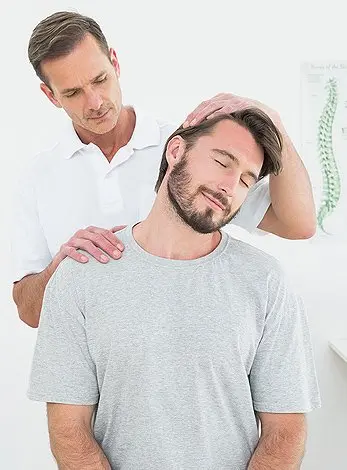
Recently I wrote an article for the Naples Daily News, “Chiropractic Medicine — Effective Alternative for Pain, Studies Show.” The response that followed was surprising.
Predictably, I received several complimentary letters and phone calls from chiropractors in the community.On the other hand, my physician colleagues were obviously less than pleased with my portrayal of chiropractors as being conscientious and effective health care practitioners.
It is our duty as health care providers to give our patients the very best care available. If a physician is unable to provide a modality which may be effective in the treatment of a medical problem, then, without question, the patient should be referred to someone who may be able to offer this type of treatment. Clearly, “If your only tool is a hammer, every problem looks like a nail.” This is why I frequently refer patients to chiropractors as well as acupuncturists, massage therapists, osteopaths, or to any one I feel may have something to offer my patient.In researching chiropractic, I was pleased to learn that chiropractors receive a considerable amount of training in nutrition during their six years of chiropractic education. This contrasts significantly with medical school. It is estimated that only one-fifth of the medical schools in this country require courses in nutrition. What this seems to indicate is by encouraging an understanding of nutrition, chiropractic is more attuned with disease prevention rather than simply disease treatment.
As a neurologist and medical director of a physical rehabilitation facility, a large part of my practice deals with various syndromes. Some patients do well with straightforward medical treatment, using non-steroid, anti-inflammatory medications, etc. Other patients seem to do well after a course of physical therapy involving both active and passive modalities. Frequently, I refer patients for chiropractic evaluation and treatment and more often than not I am gratified by the response that my patients get.
Perhaps this article should have been published in a medical doctor’s journal as opposed to “DC.” In my experience, chiropractors have always known when it was appropriate to obtain consultation on a patient from another specialty. Medical doctors, however, have always seemed unlikely to refer patients to chiropractors, and this is not only unfortunate but also unfair since it deprives patients of a potentially useful modality.
There is no one discipline that has a corner on the market of techniques useful in patient care. No one discipline has all the tools. Hopefully, with time my medical colleagues will learn to concentrate on the ultimate goal of providing patients with the best chance of feeling better and realize that chiropractic has a lot to offer.
It's nice to see this coming from a doctor I highly respect for his medical and nutritional knowledge. As a Chiropractor I would like to see more cross referrals to M.D's and from M.D's. It's about getting the patient the best care available and not about the politics. Great article Dr.Perlmutter

I try to work out on an empty stomach or 1 hr. after a protein shake . I believe if you are trying to lose weight you want to work out on an empty stomach. It is only common sense the reason your working out, if over weight,is to burn more calories than you are taking in.
Figure 1. EGb761 protects motoneurons against avulsion-induced injury in rats. EGb761 protects motoneurons against avulsion-induced injury in rats. The neuroprotective effect of EGb761 against avulsion injury is associated with reductions in nitric oxide production and NOS expressions in the injured spinal cord. Compared to saline controls, EGb761 reduced nitric oxide levels in the serum at 2 w and 6 w, but not at 5 d and 4 w (Fig. A) and reduced nitric oxide levels in injured C6-T1 spinal segments at the 2 w, 4 w and 6 w time points (Fig. B). EGb761 down-regulated cNOS levels (Fig. C), iNOS (Fig. D), nNOS levels in injured C6-T1 spinal segments (Fig. E,F), nNOS expressions in ipsilateral ventral horn motoneurons, and the death of injured motoneurons in ipsilateral ventral horn (Fig. H,J,L,N,P) induced by C5-T1 root avulsion injury. *P
Keep an eye on this EGb761.